NIS2 or MISS2?
Introduction February 2026. ShinyHunters, a well-known cybercrime group, used phishing and social engineering to gain access to Odido’s Salesforce environment.…
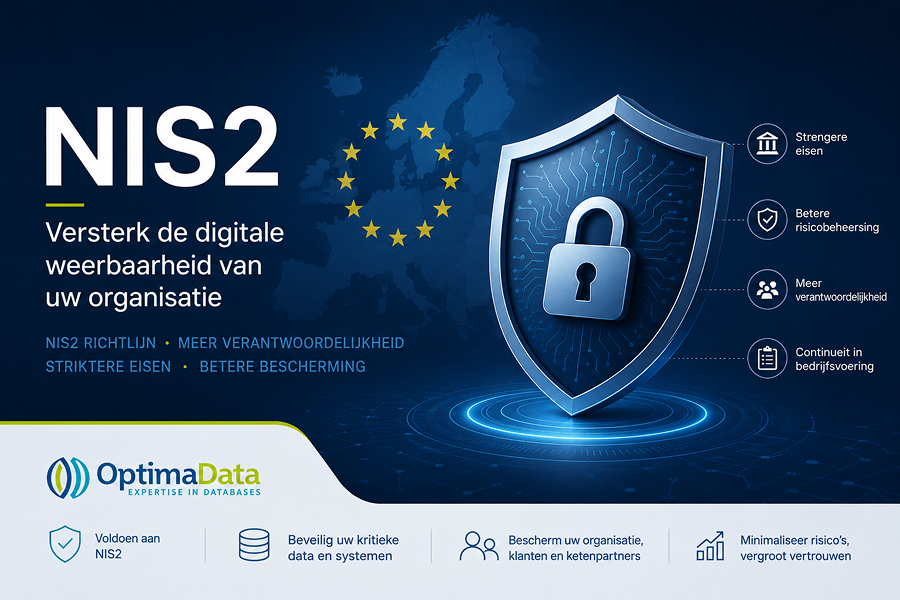
On May 14th 2026, the PostgreSQL Global Development Group released a security update for all supported versions: 18.4, 17.10, 16.14, 15.18 and 14.23. It fixes 11 security vulnerabilities in total, and they’re not minor edge cases.
Now that the dust has settled around pgBackRest, it’s a good moment to look at the latest PostgreSQL security update. We strongly recommend installing it in any case, and especially if your organisation falls under NIS2 (or the Dutch Cybersecurity Act, the Cbw) and your compliance is on the line.
Some of the more notable vulnerabilities fixed in this release:
Besides the security fixes, the update also resolves more than 60 bugs, ranging from incorrect query results with nondeterministic collations to problems with foreign key triggers and partition pruning.
Simple: update. A PostgreSQL minor update doesn’t need a dump/restore or pg_upgrade. You stop the database, install the new binaries and restart. Most organisations can handle this in a scheduled maintenance window.
If you put it off, these vulnerabilities will become public knowledge while your database is still running unpatched.
PostgreSQL 13 reached end-of-life on 13 November 2025. That means the vulnerabilities fixed last week (including the timing attack on MD5 authentication, the SSL denial of service and the stack buffer overflow in the refint module) will stay unpatched in PostgreSQL 13. For good.
On 12 November 2026, PostgreSQL 14 also stops receiving updates. Based on the release cycle, last week’s release (14.23) is probably the second-to-last minor release. There’s one more update to come, in August 2026. After that: silence.
Because major version upgrades in PostgreSQL aren’t trivial. You can’t just swap the binaries like you do with a minor update. You need pg_upgrade or a dump/restore, your extensions have to be compatible and your application needs to be tested on the new version. That takes time, and right now you still have it.
Moving from version 13 or 14 to version 16, 17 or 18 can be fully planned and carried out without significant downtime, as long as you approach it the right way. Wait too long and you’ll still have to do it, only under pressure.
Not sure which version you’re running, or how big the jump is? We’d be happy to run a QuickScan of your environment and give you clear upgrade advice.
A minor update is simply a matter of planning and doing it. Not quite sure? We’re happy to help. A major upgrade is a different story: checking extensions, testing applications, mapping out a migration path. It sounds daunting, but it’s very doable if you start in time. Not sure where you stand? Get in touch, with no obligation as always, and we’ll work out together what’s needed.
Caught a bit off guard, and would you rather know where you stand sooner and simply have it taken care of? Then consider a maintenance contract. It doesn’t have to be expensive. Take a look at our DBFit offering, for example.